
Is Sightseeing Enough? Five Days in Tao-Klarjeti and What Comes Next
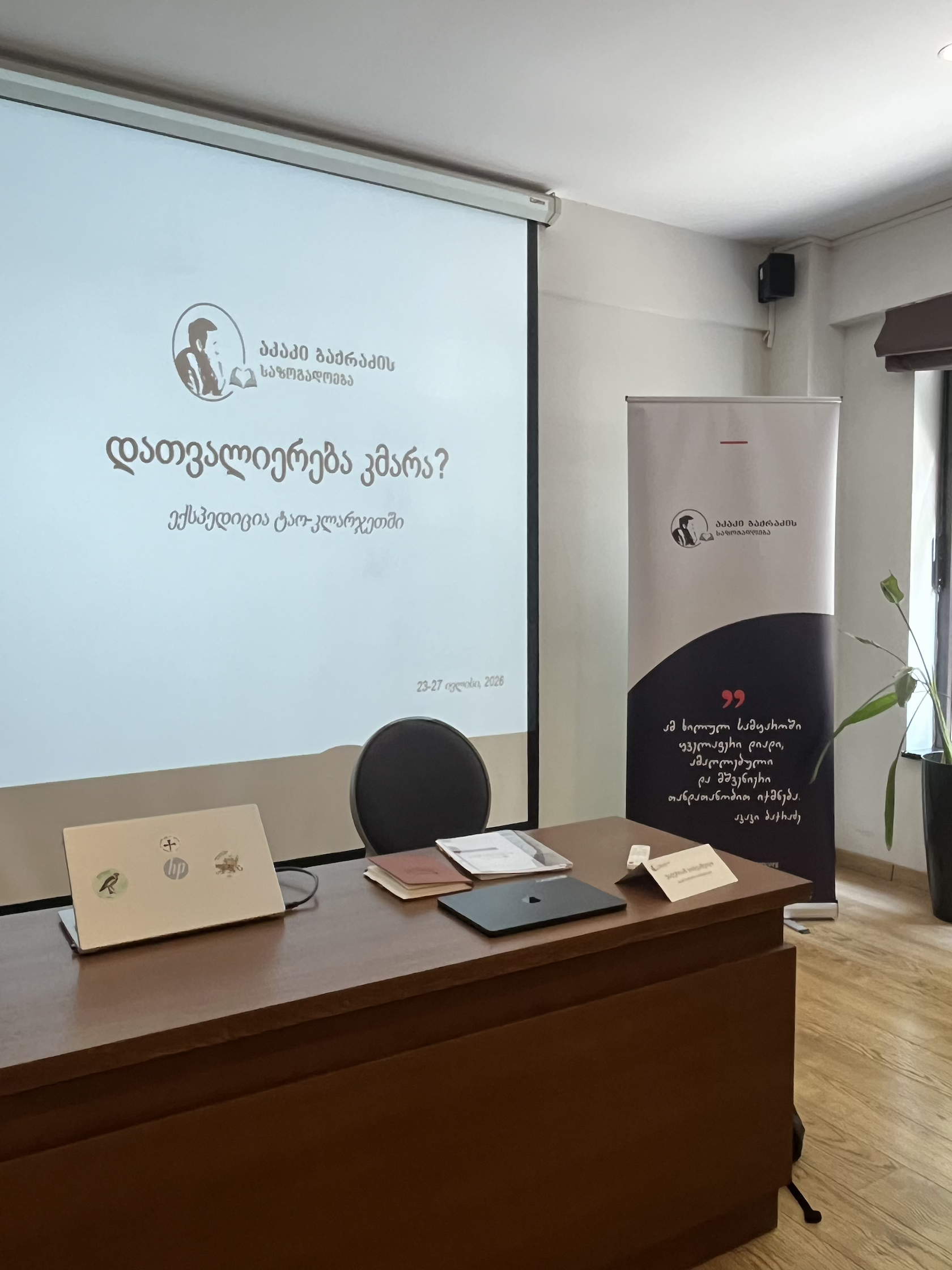
“Is sightseeing enough?” — this was the question with which our five-day expedition to Tao-Klarjeti began.
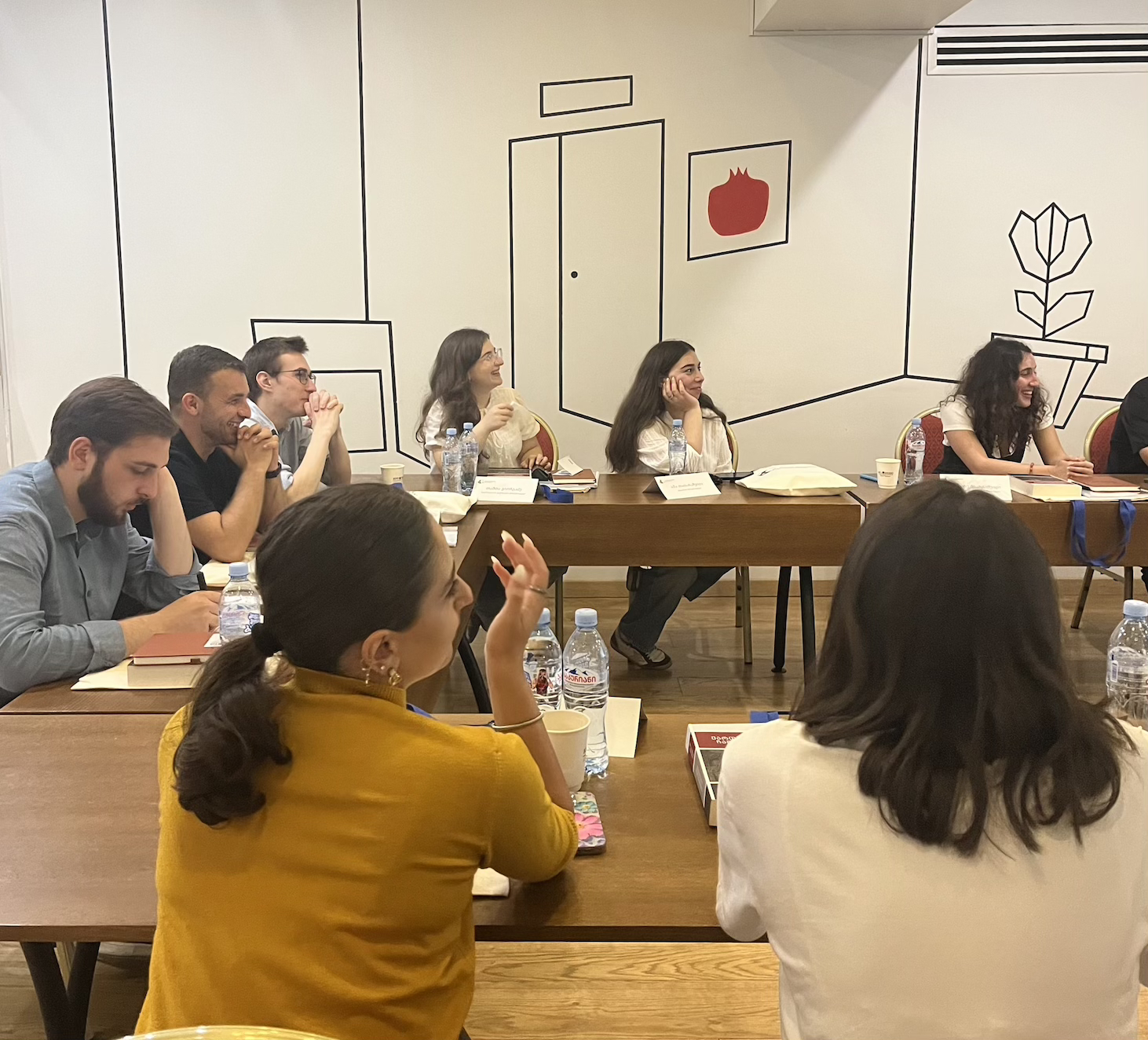
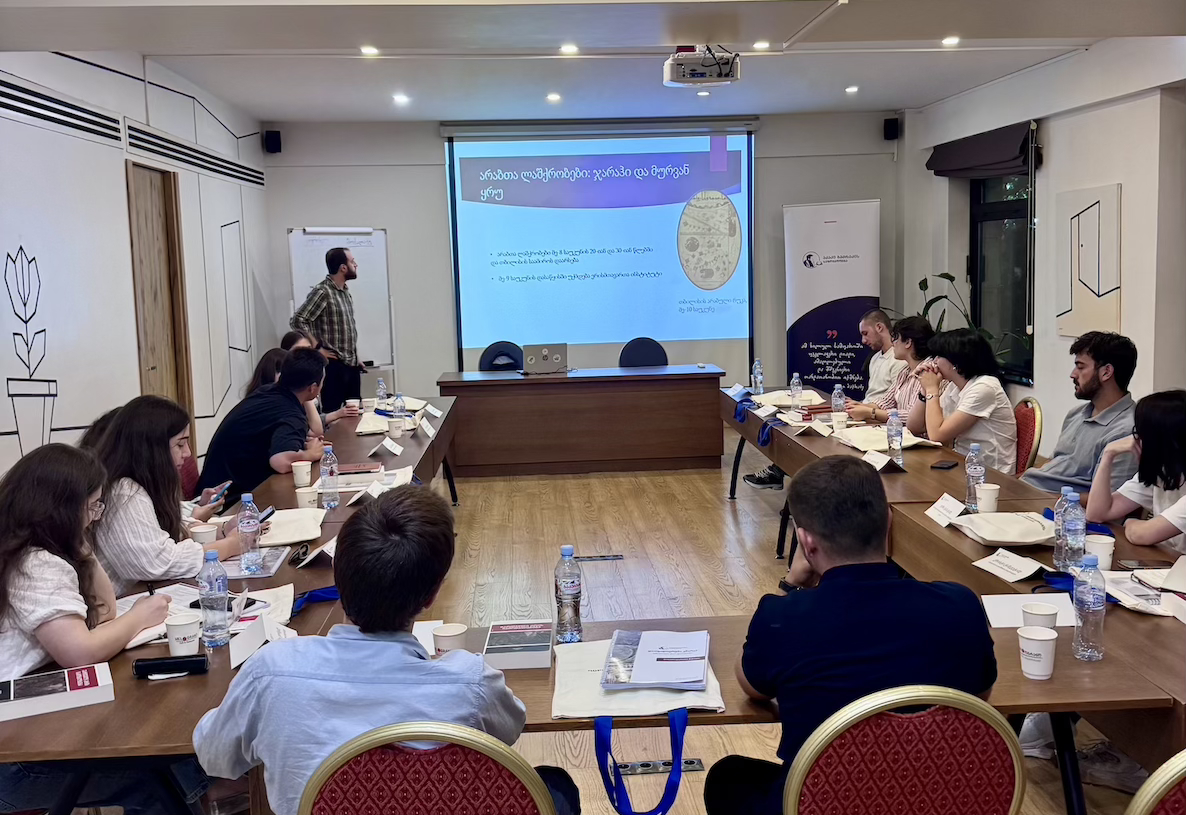
Before reaching Tao-Klarjeti, we spent our first day thinking about what that question actually means—and what it demands of us. We returned to Akaki Bakradze’s ideas about the distance that so often exists between words and actions, and why speaking about responsibility is much easier than assuming it. We discussed what it means to care for one’s own heritage—not by waiting for someone else, or only the state, to act, but by asking what responsibility belongs to each of us.
We also considered a different difficulty: even a well-intentioned initiative can become misguided when it begins with our own assumptions rather than with an understanding of what people, communities, or the heritage itself actually need. Wanting to help is not enough. We first have to listen, see, understand, and resist the temptation to impose our own vision of what should be done.
These conversations became the intellectual starting point of the expedition.
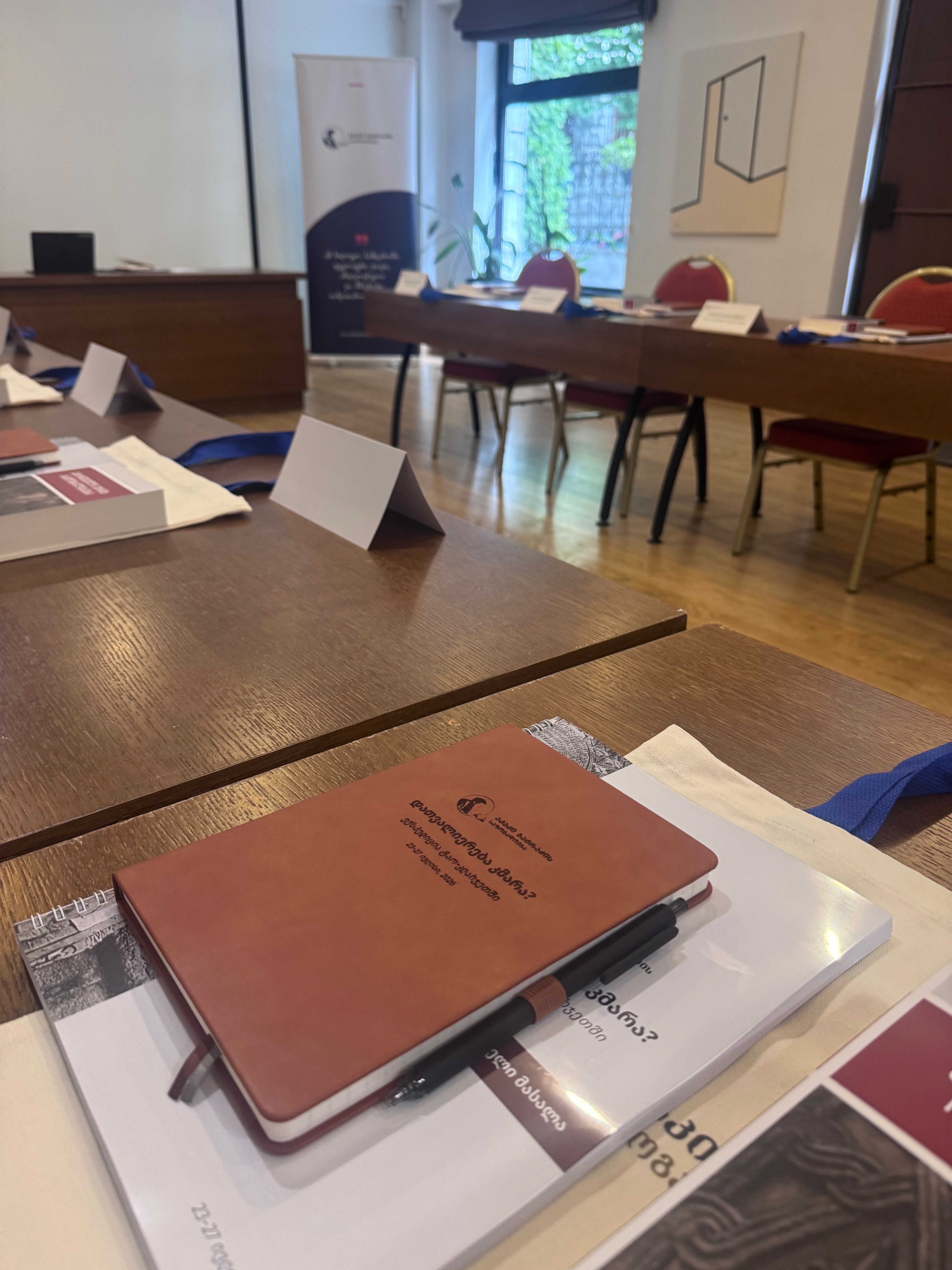
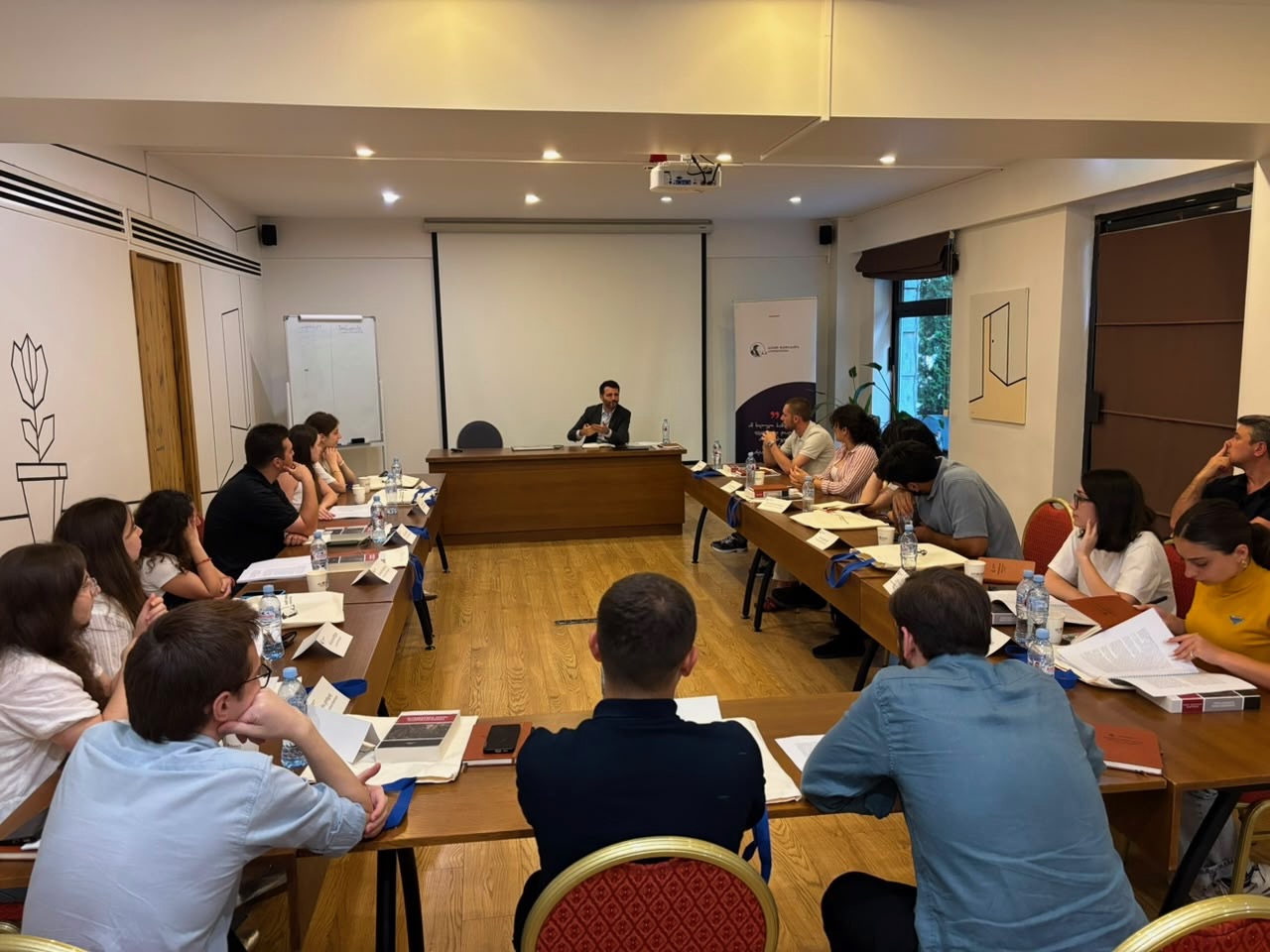
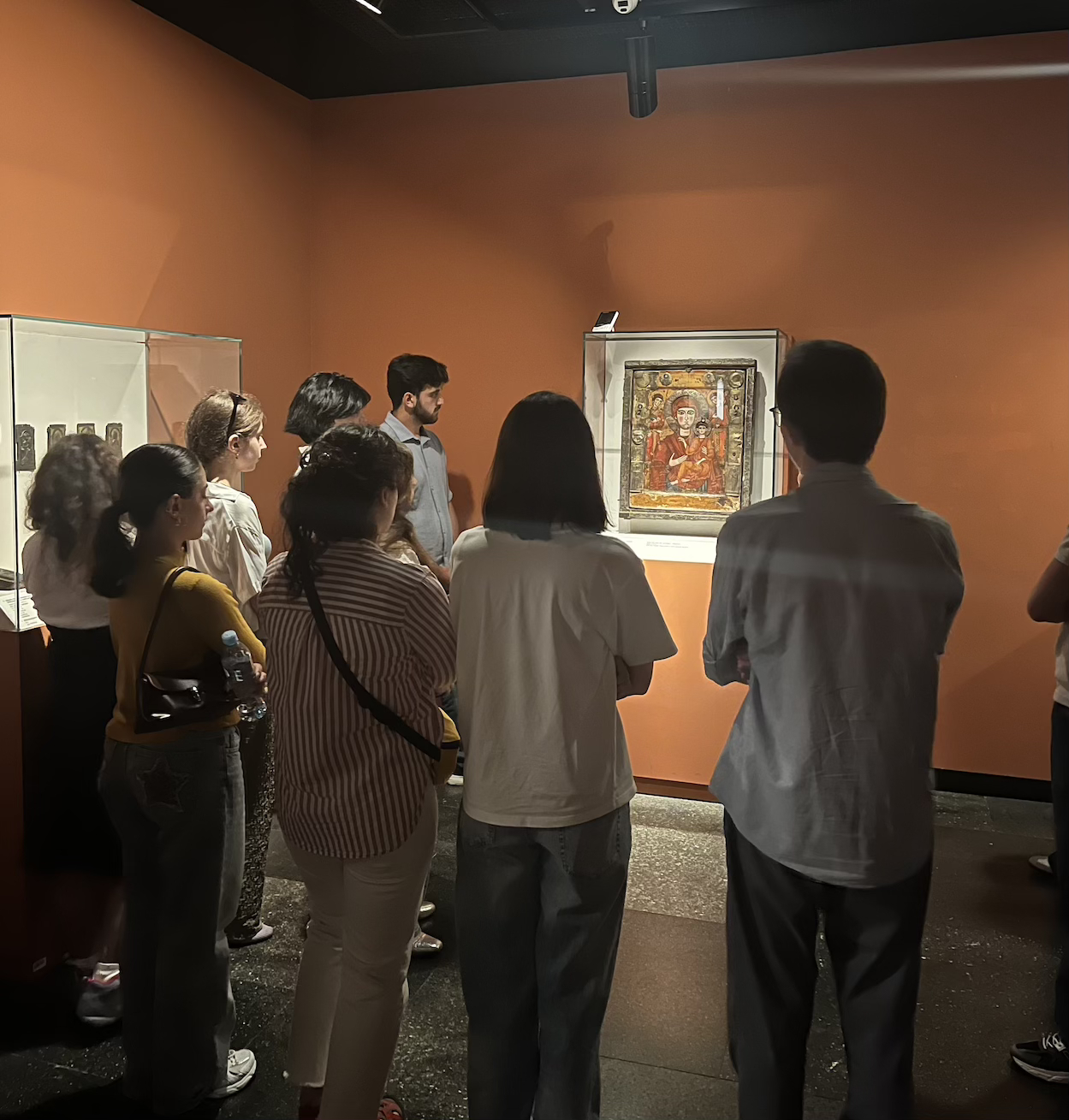
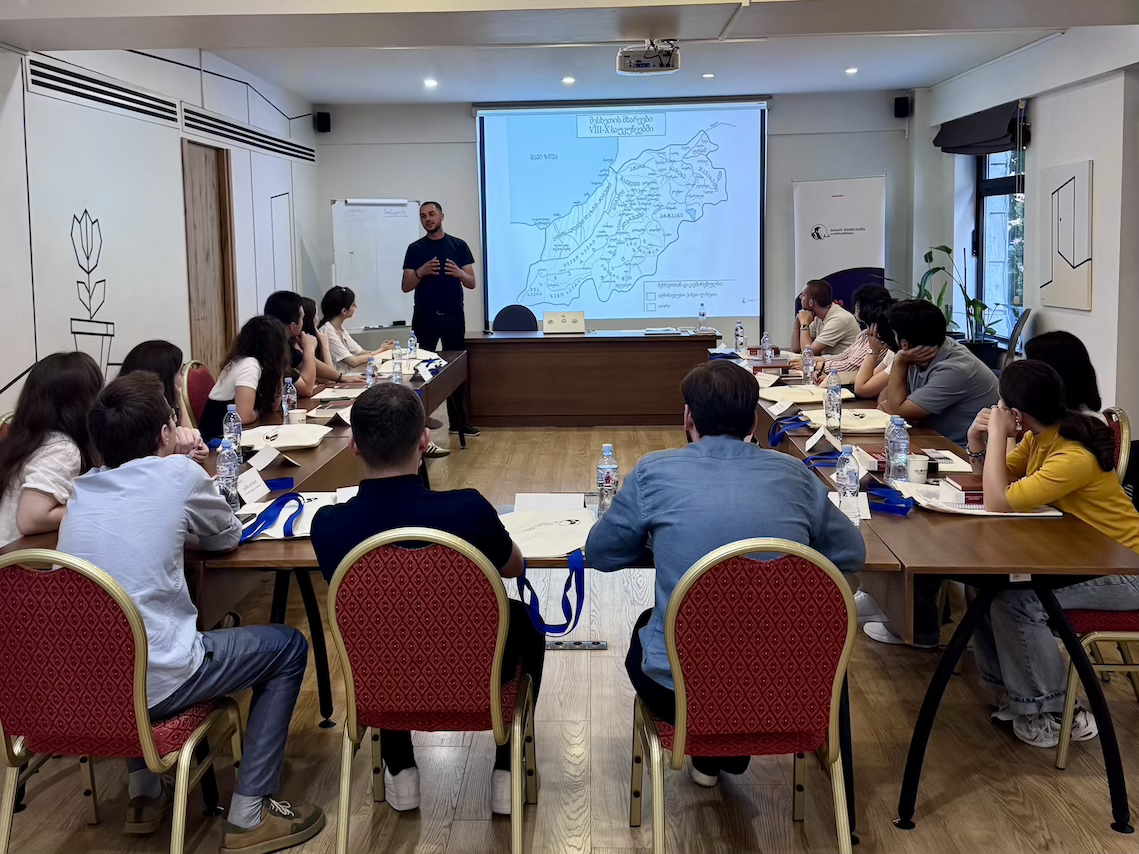
Then we arrived in Tao-Klarjeti.
Over the following days, ideas first discussed around a table were confronted with places, landscapes, and realities that are much harder to absorb from a distance.
At Khanzta, Oshki, Otkhta, and Bana, students encountered monuments whose scale and ambition still astonish centuries later. There was pride in seeing what had once been built there: the imagination, confidence, labor, commitment, and ability required to create something so monumental, often in places difficult even to reach today.
Kesane Katsiashvili writes: “Returning from Tao-Klarjeti strengthened tenfold my faith in our great ancestors, in the Georgian people as a whole, and, consequently, in myself.”
But alongside that pride was sadness. Some places are deteriorating. Traces are disappearing. Structures that have survived for centuries can now feel painfully vulnerable.
Barbare Chkhartishvili described the experience as “a joy tinged with sadness”—the joy and admiration of encountering what had been created intertwined with the pain of seeing what is slowly being lost.
For architecture student Tamta Giorgadze, the experience remained intensely visual even after returning home: “When I close my eyes, I still see, like shadows, the rhythmic succession of arches and the columns rising toward the sky.”
The history they had read about was no longer confined to books. It had acquired scale, texture, distance, physical difficulty—and fragility.
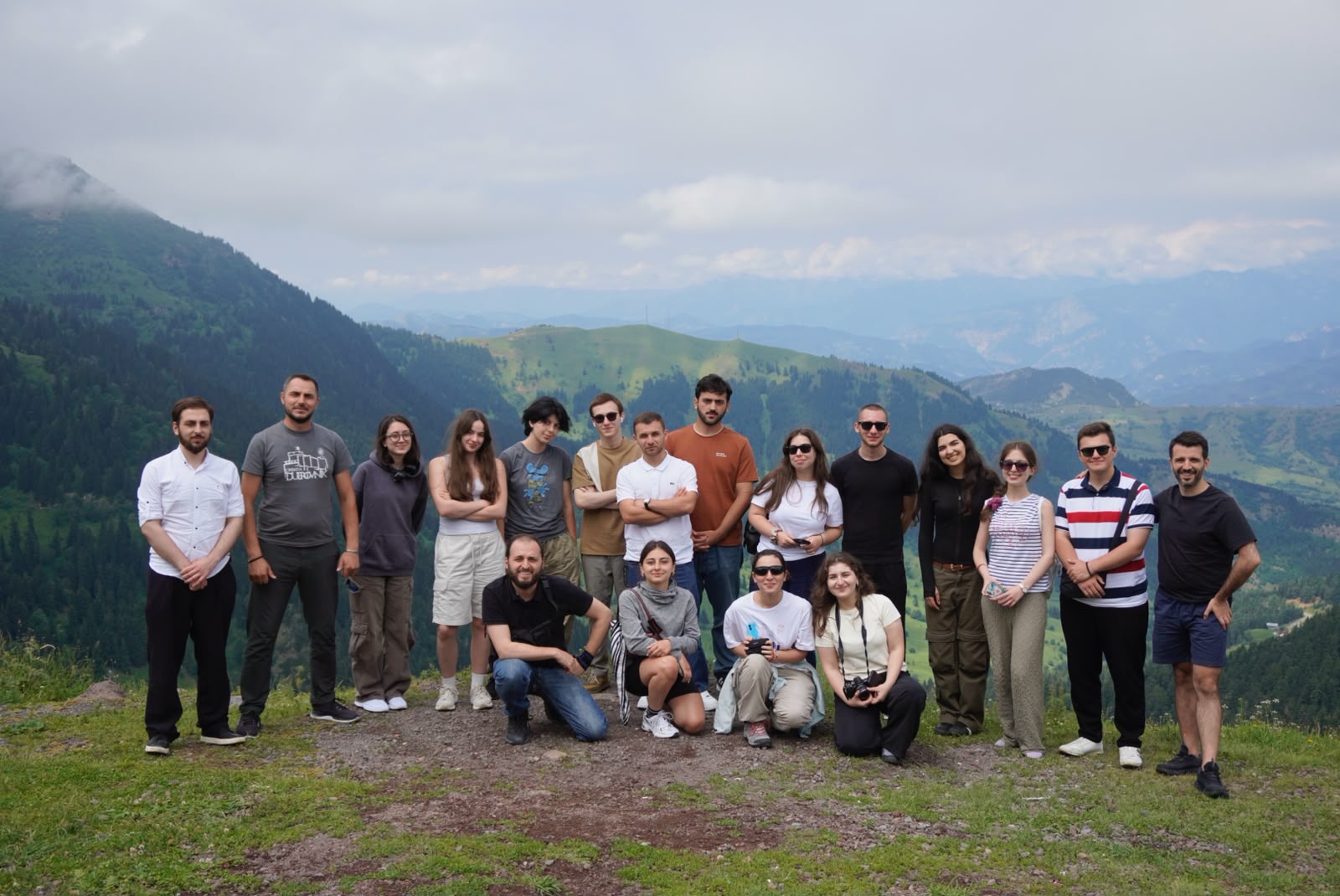
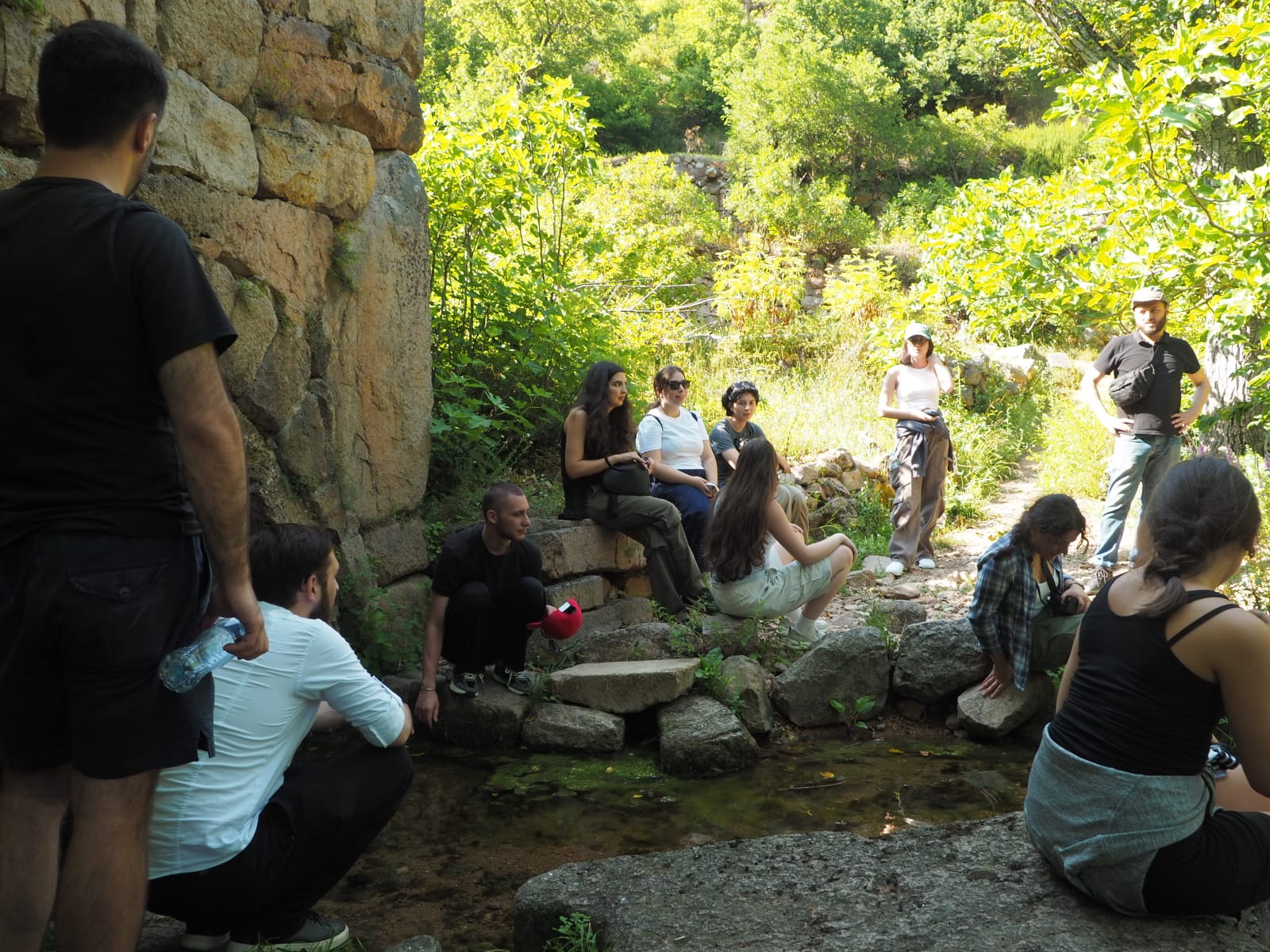
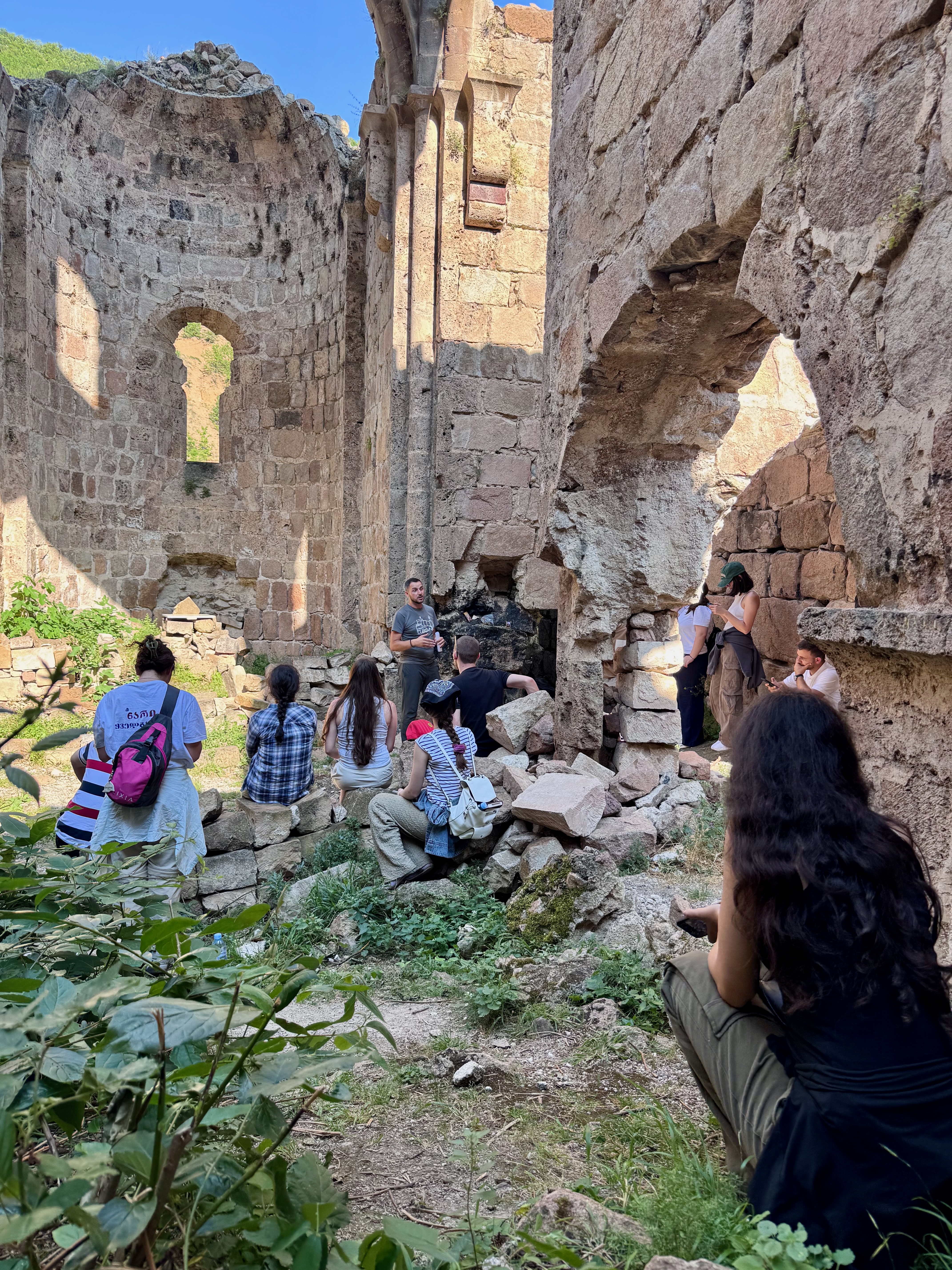
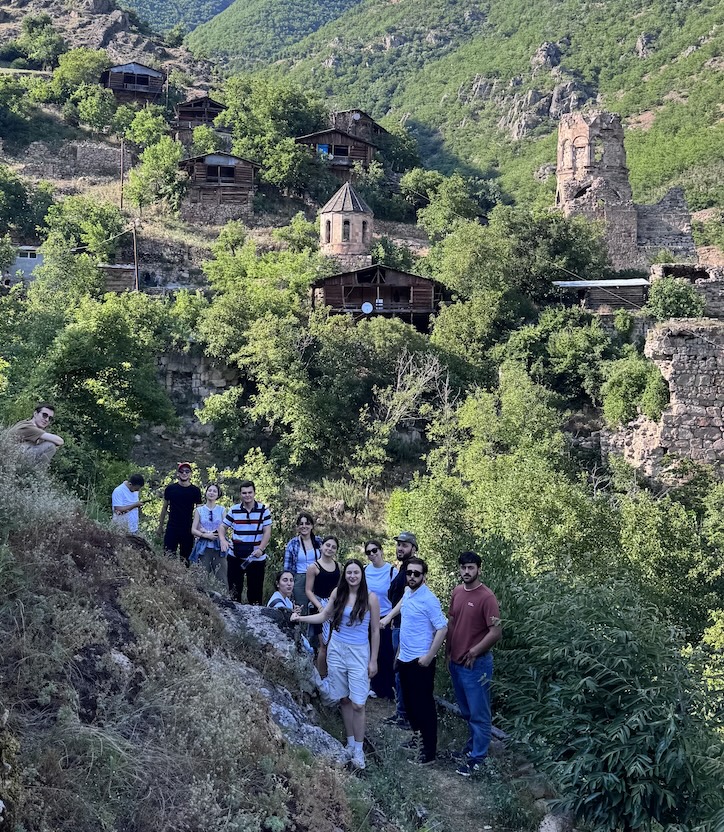
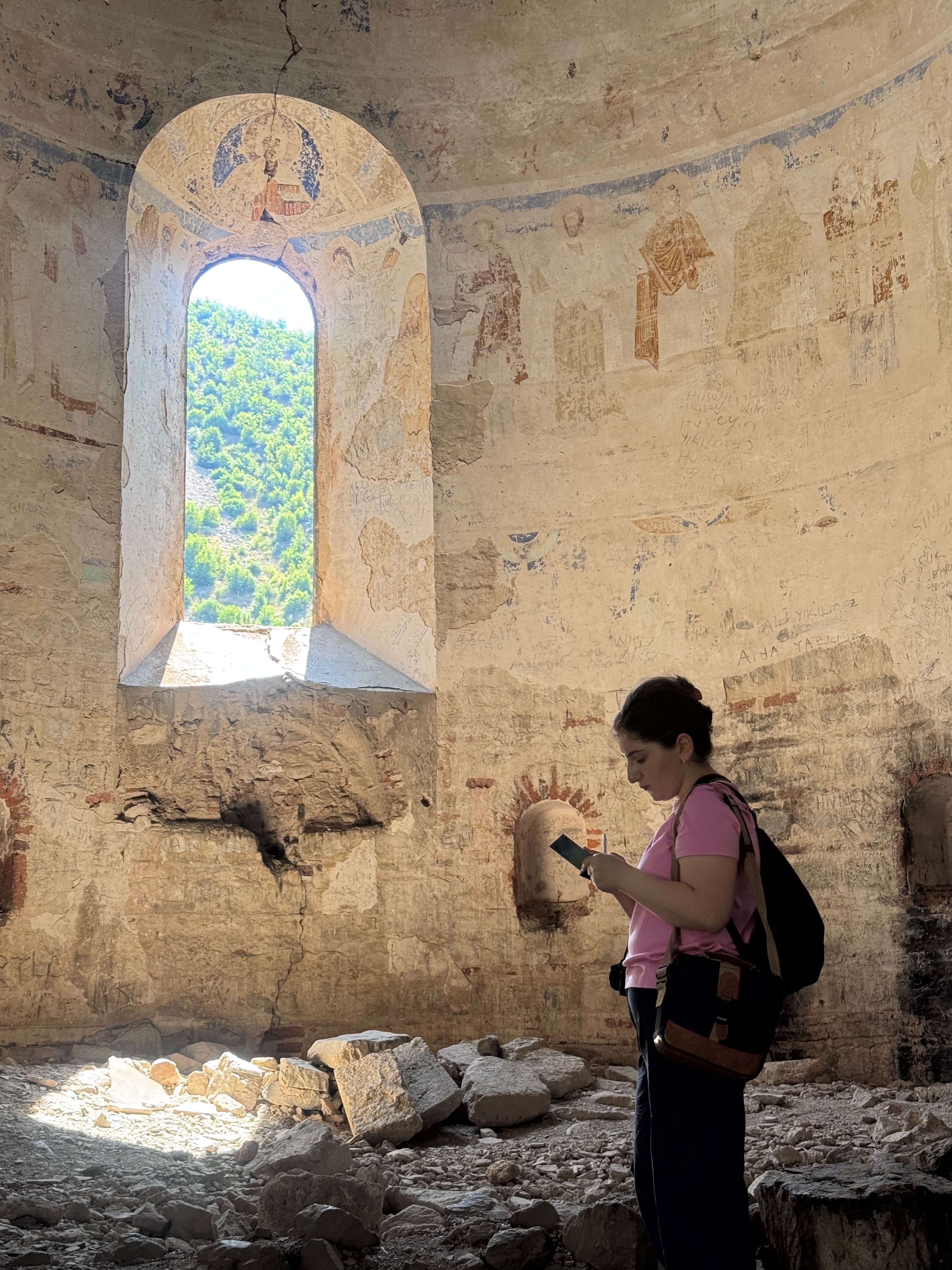
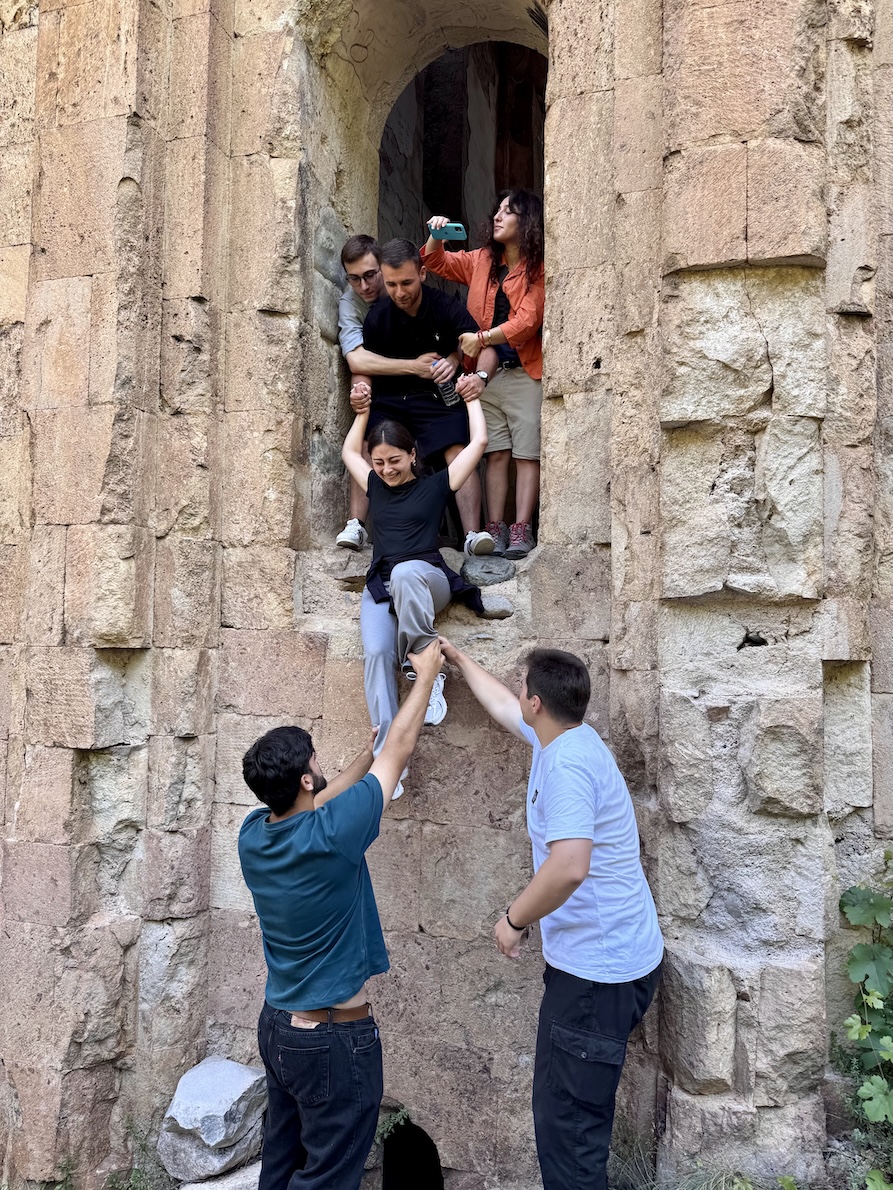
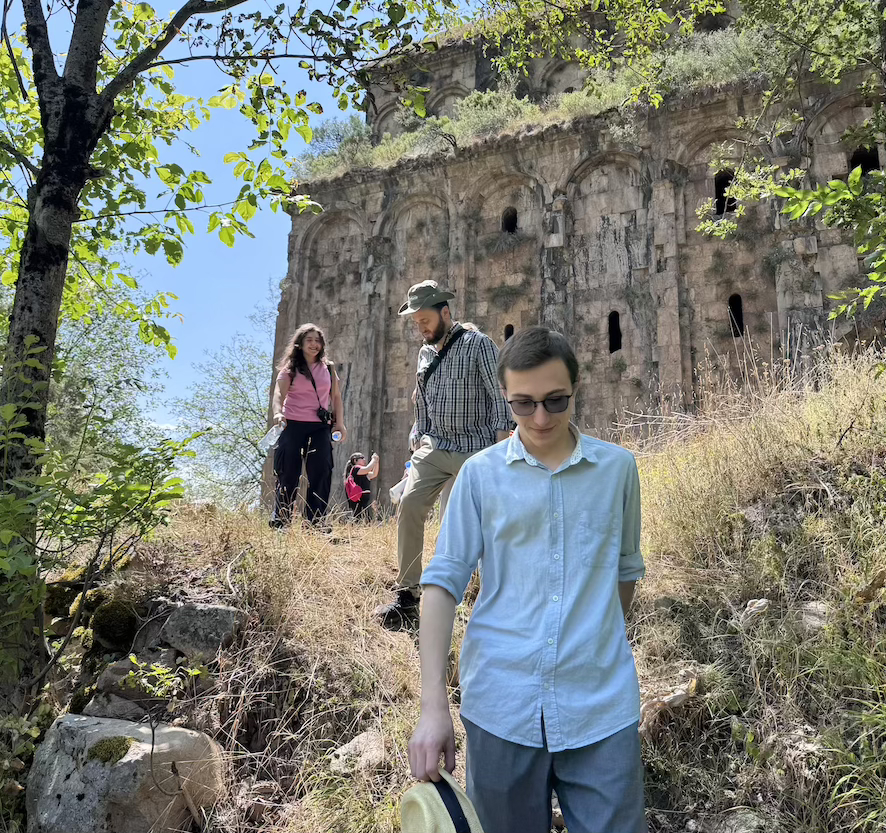
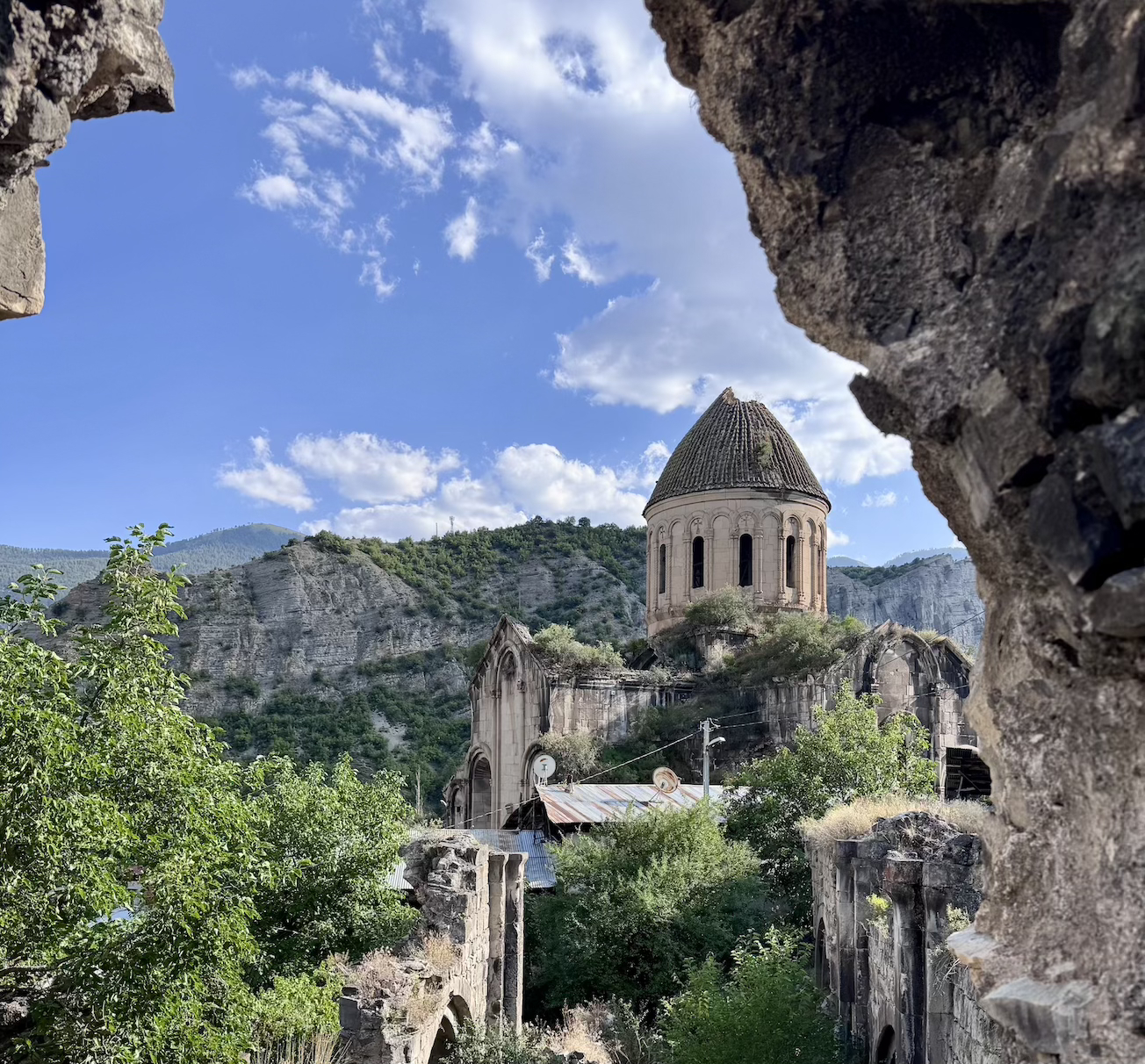
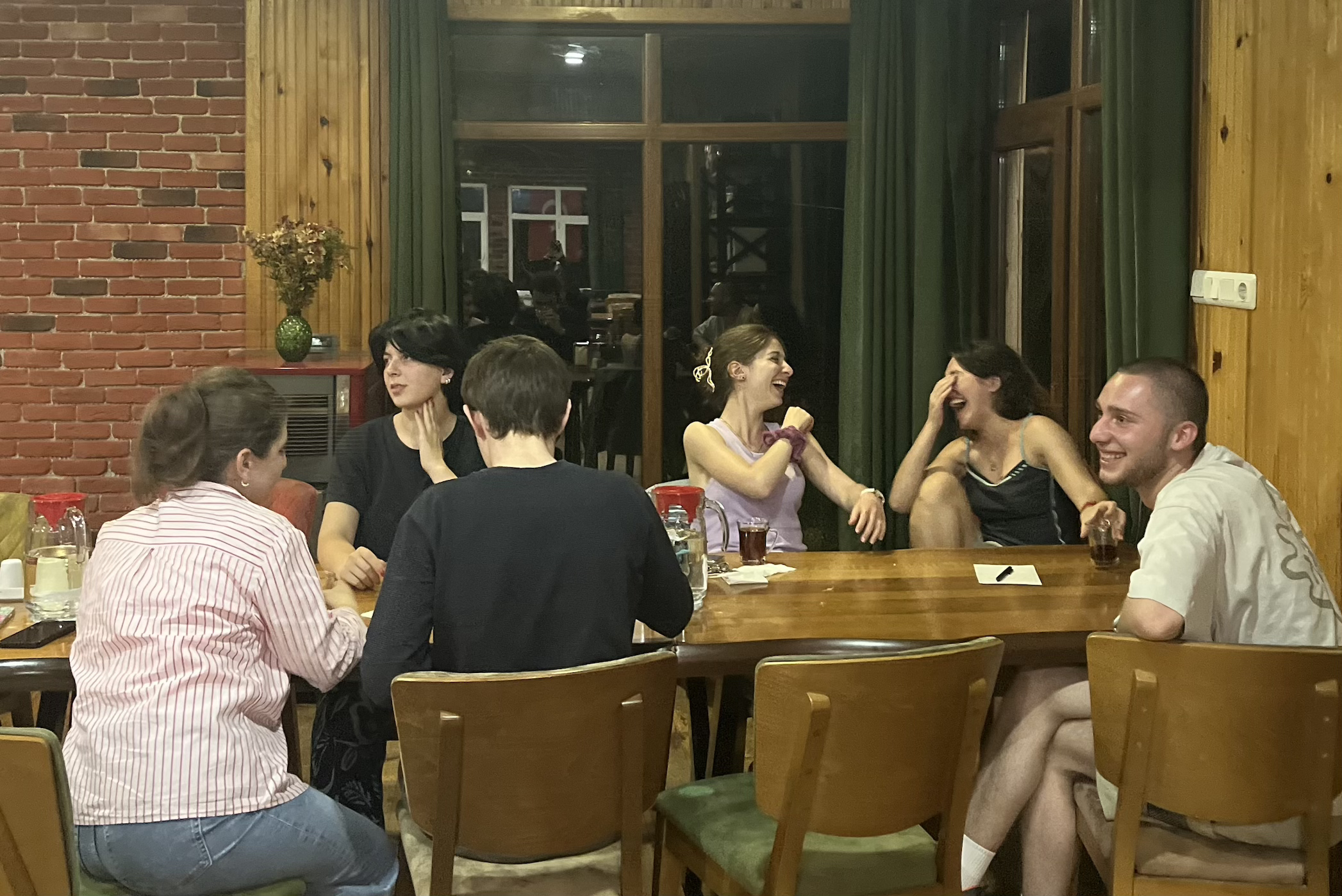
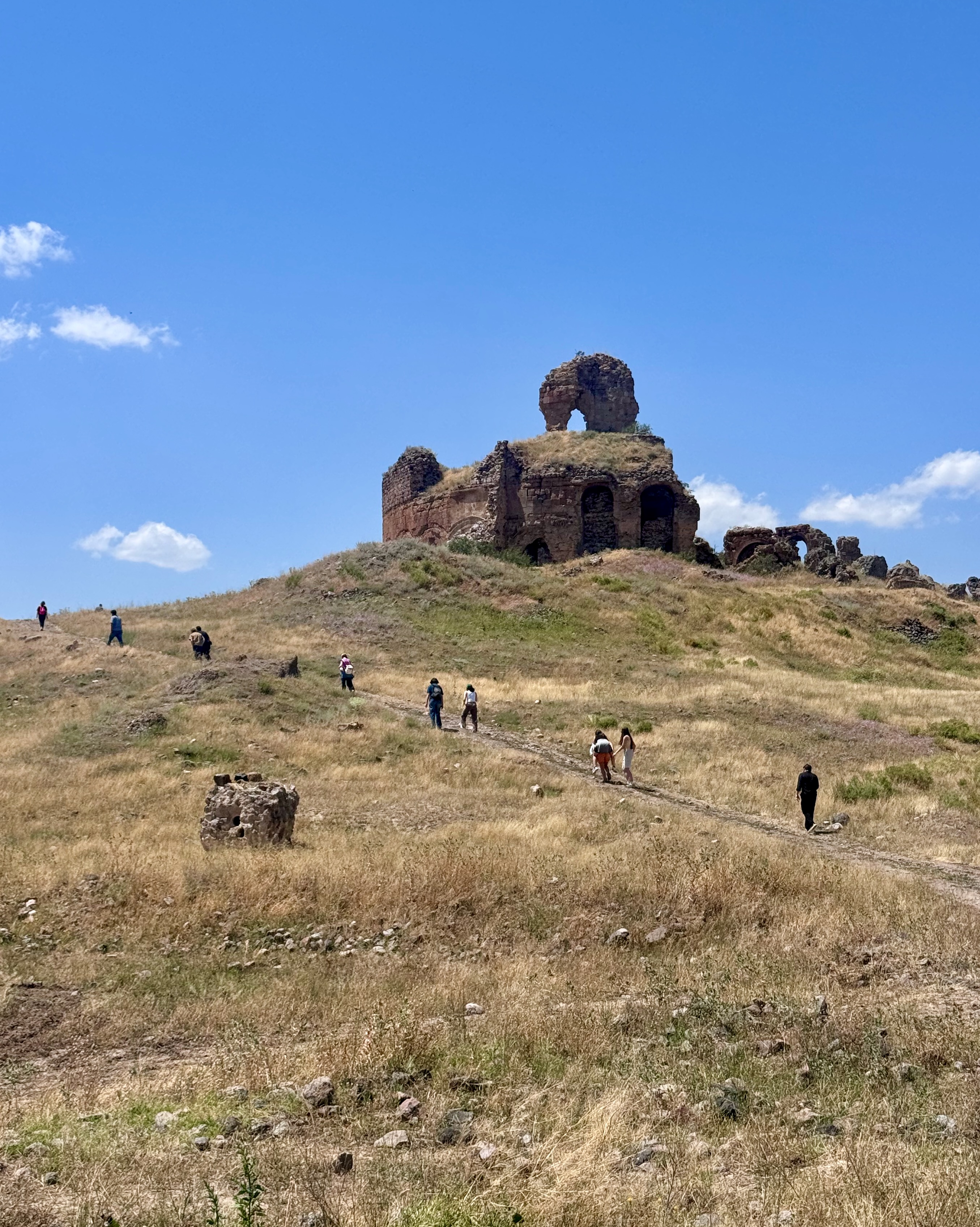
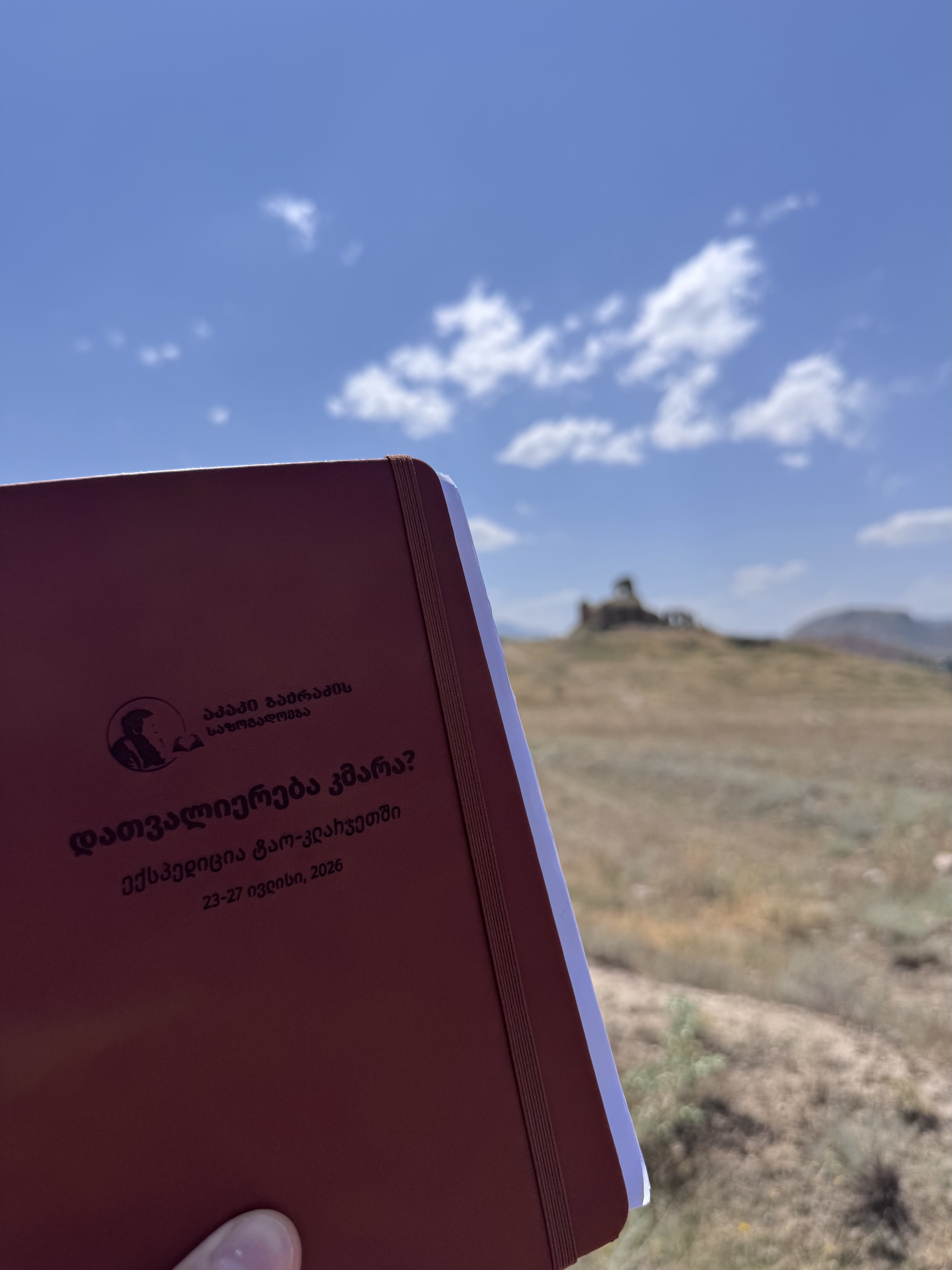
But the expedition was not only an encounter with buildings. Over five days, fifteen students from different universities, academic fields, and backgrounds gradually became a group in a fuller sense of the word. They helped one another over difficult climbs. They talked for hours on the road and over meals. They debated what they were seeing and what, if anything, could be done about it. At Otkhta, the sound of a salamuri briefly filled the space inside the church.
At our hotel, a conversation with its Georgian-heritage owner made questions of heritage less abstract and more immediate. The conversation moved from monuments to language, family, memory, belonging, and the difficulty of passing a connection to Georgia from one generation to another.
These were no longer only questions about how to preserve a building. They were questions about what survives in people—and what can disappear quietly if no one assumes responsibility for its continuation.
The relationships forming within the group mattered as well. Several students later chose photographs not of the most monumental churches, but of one another: resting together on the road to Khanzta, helping someone through a window at Otkhta, walking toward Bana, or supporting an exhausted friend on a difficult ascent.
Those photographs captured something that was harder to plan in advance: people who had arrived largely as strangers beginning to rely on one another.
And somewhere among the monuments, conversations, long drives, meals, and encounters with local people, ideas began to emerge.
Not polished projects. Not ready-made answers. Questions worth pursuing and possible ways of acting.
The purpose of the expedition was never simply to leave students impressed. It would have been easy to return to Tbilisi with photographs, powerful emotions, and the sense of having experienced something important. But that would still leave the question with which we began unanswered:
If sightseeing is not enough, what comes after seeing?
The students returned with questions, new relationships, and ideas. They are now working to sharpen those ideas, test them against reality, and develop them into projects that they will present in October.
The challenge is no longer simply to identify something worth doing. It is to understand where an initiative can genuinely be useful, what the people or places involved actually need, what is realistically possible—and how an idea can become action.
As Lizi Tabatadze writes: “The knowledge we gained was accompanied by powerful emotions which, I am convinced, are pushing every participant in the expedition toward one shared goal—action.”
In the coming weeks, we will continue sharing the expedition through the students’ own eyes on Instagram: the photographs they chose as the moments that best captured their experience, accompanied by their own reflections on why those moments stayed with them.